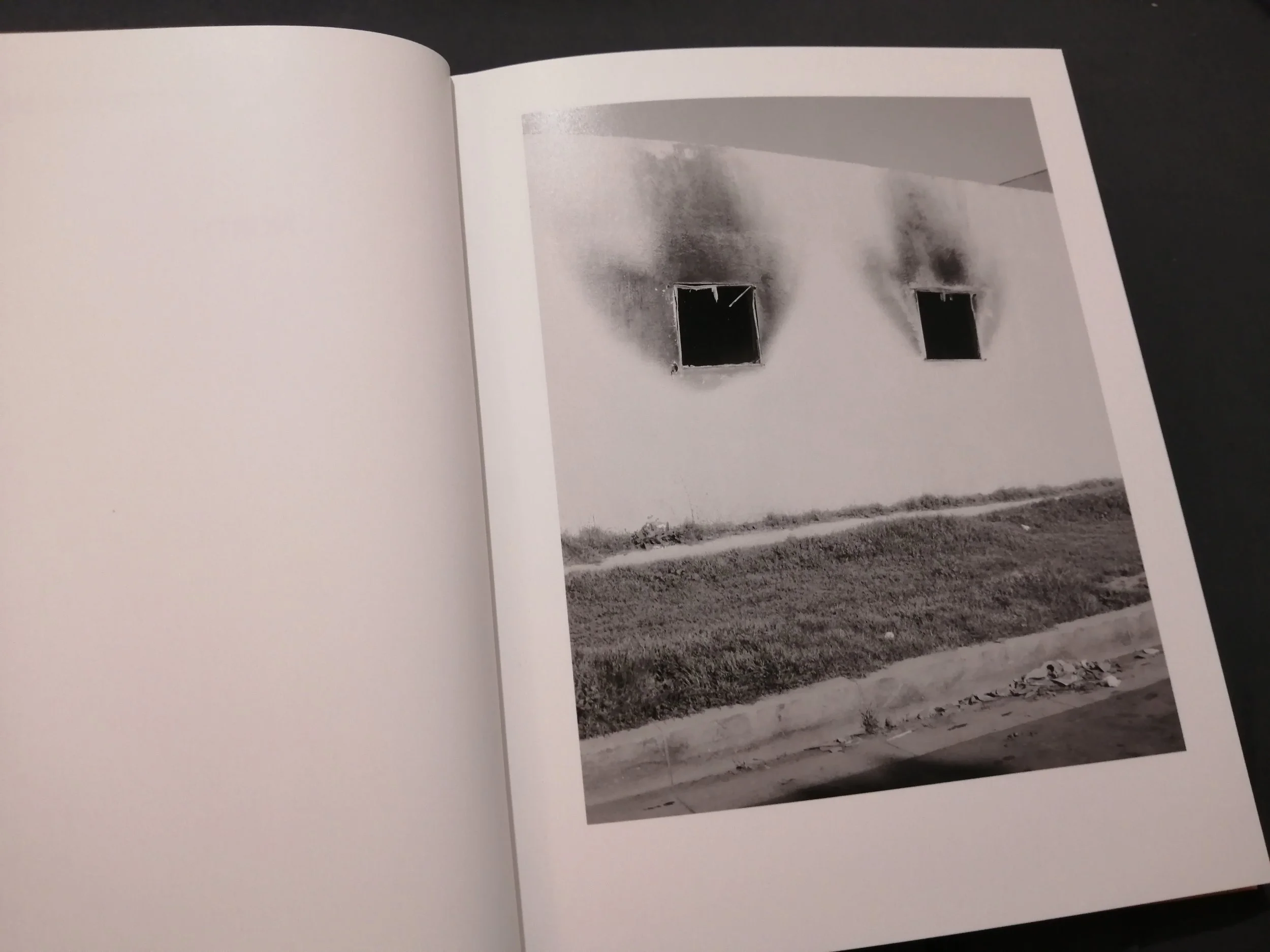
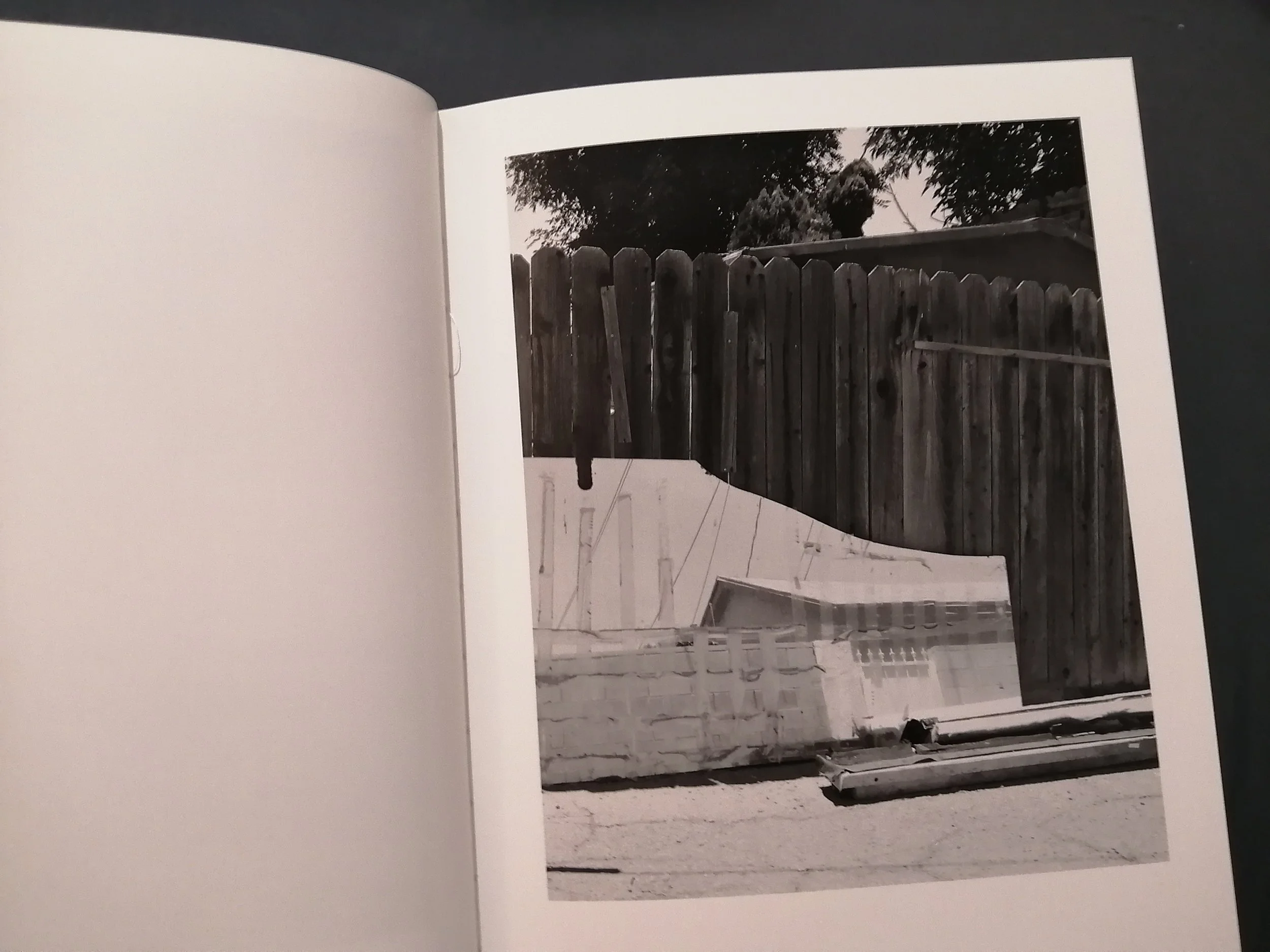
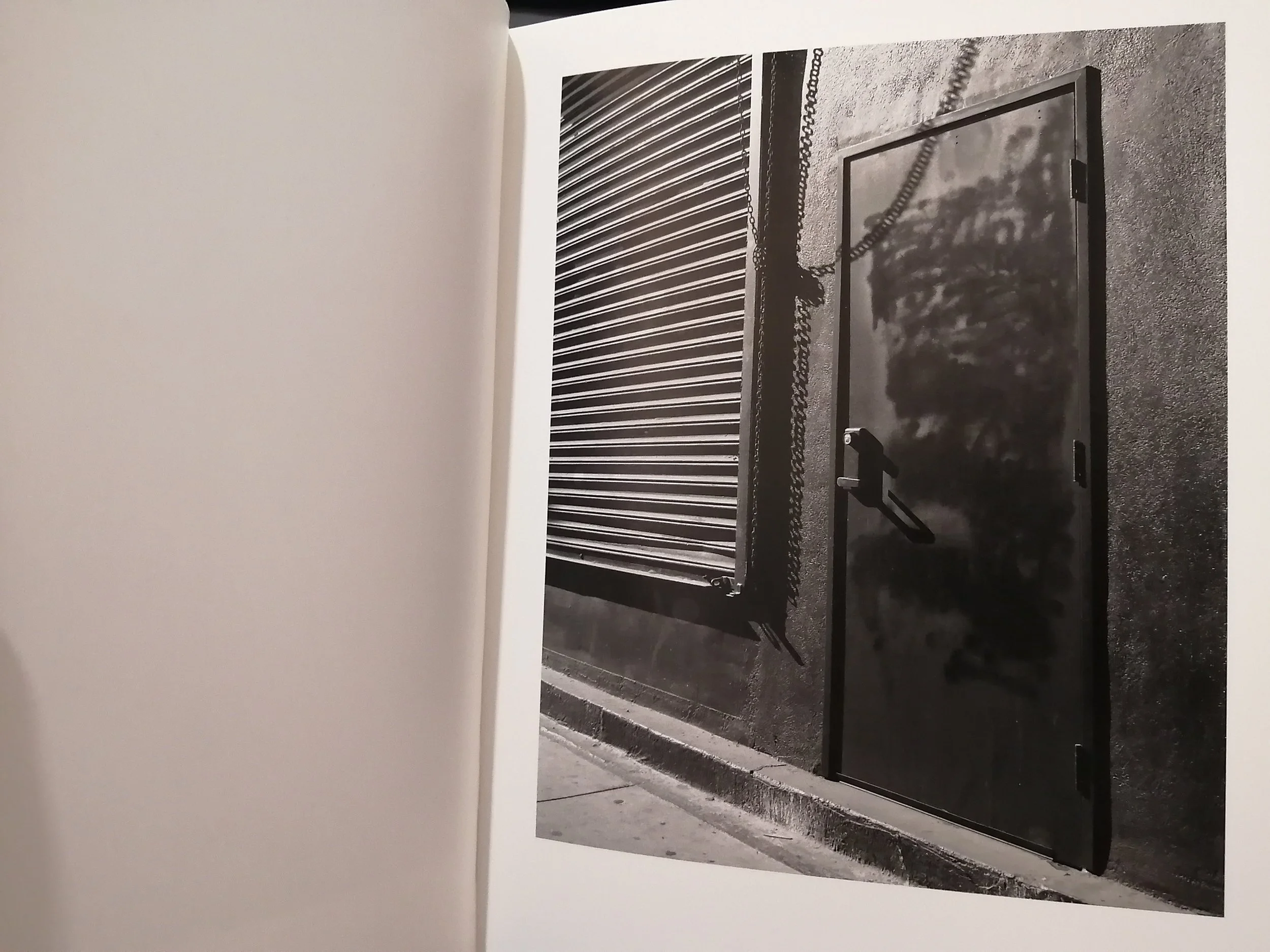
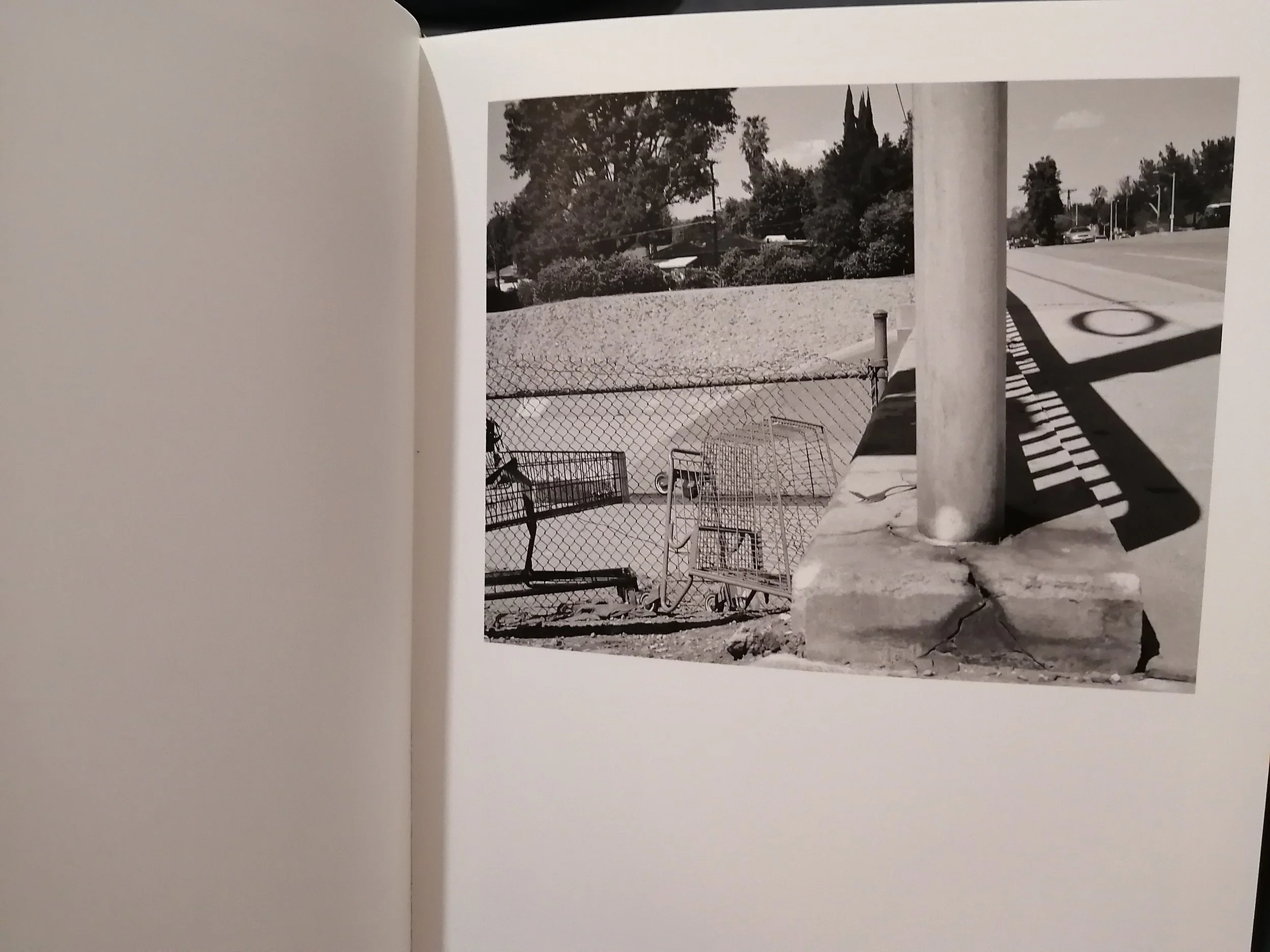
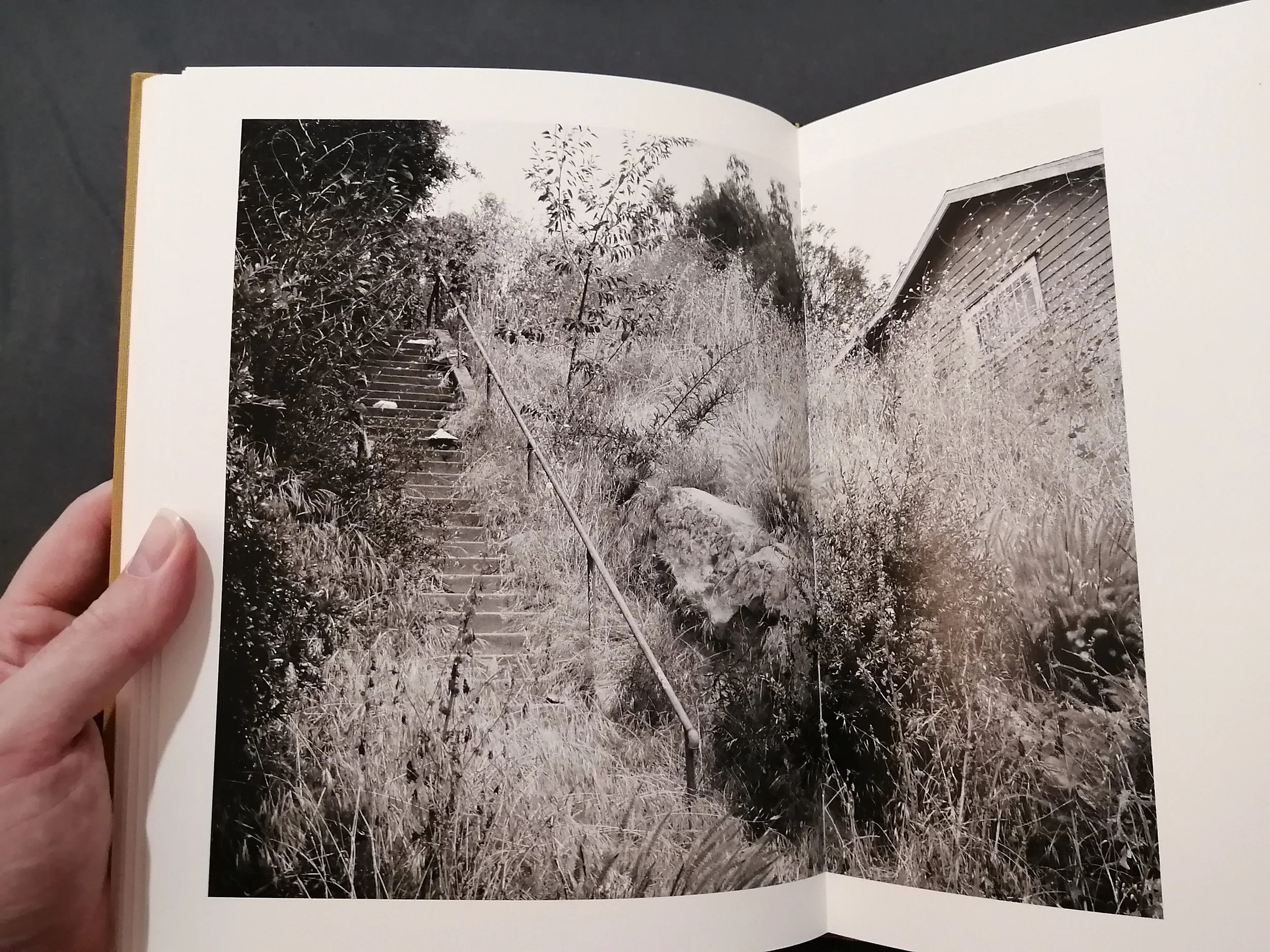
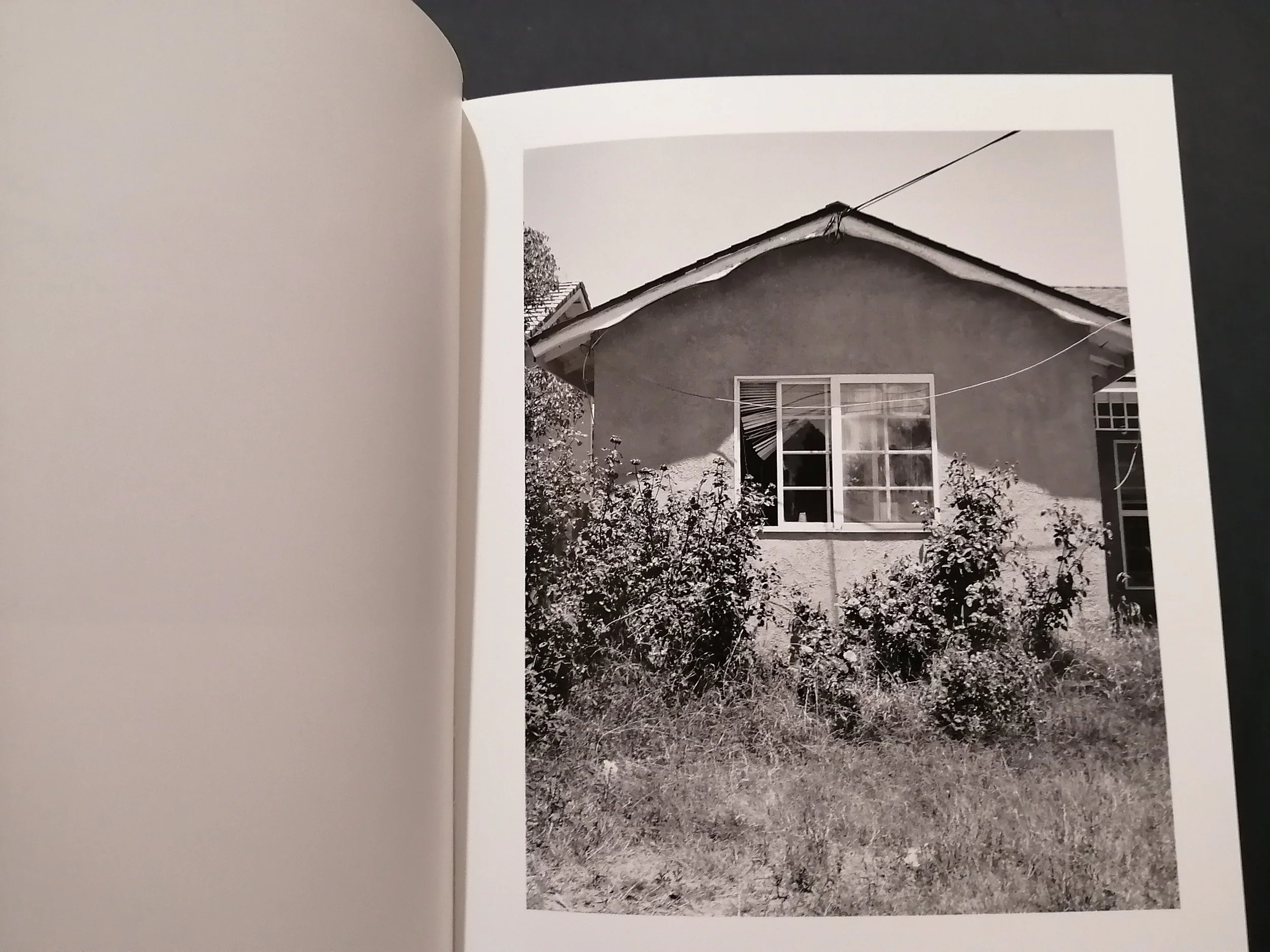
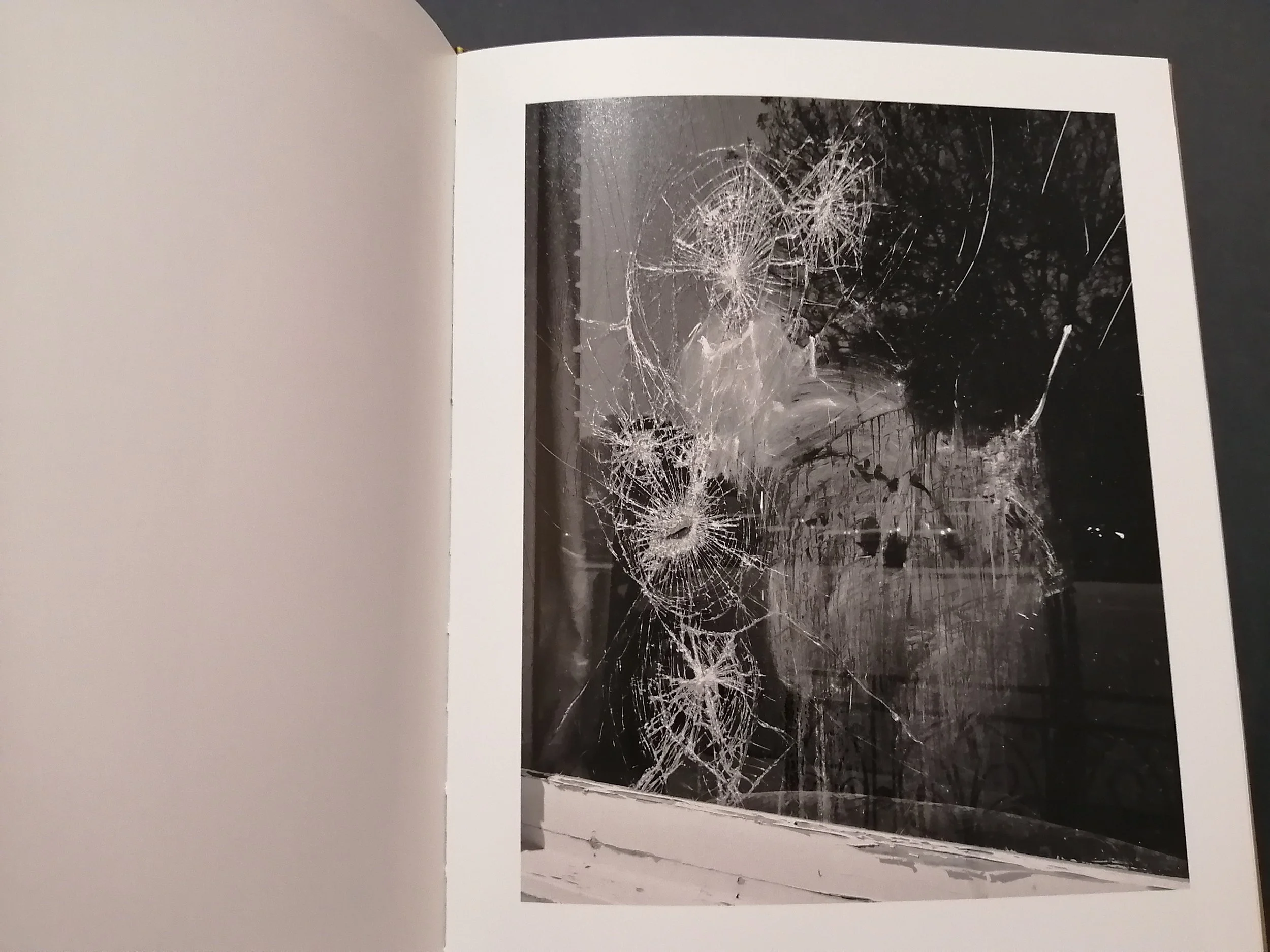
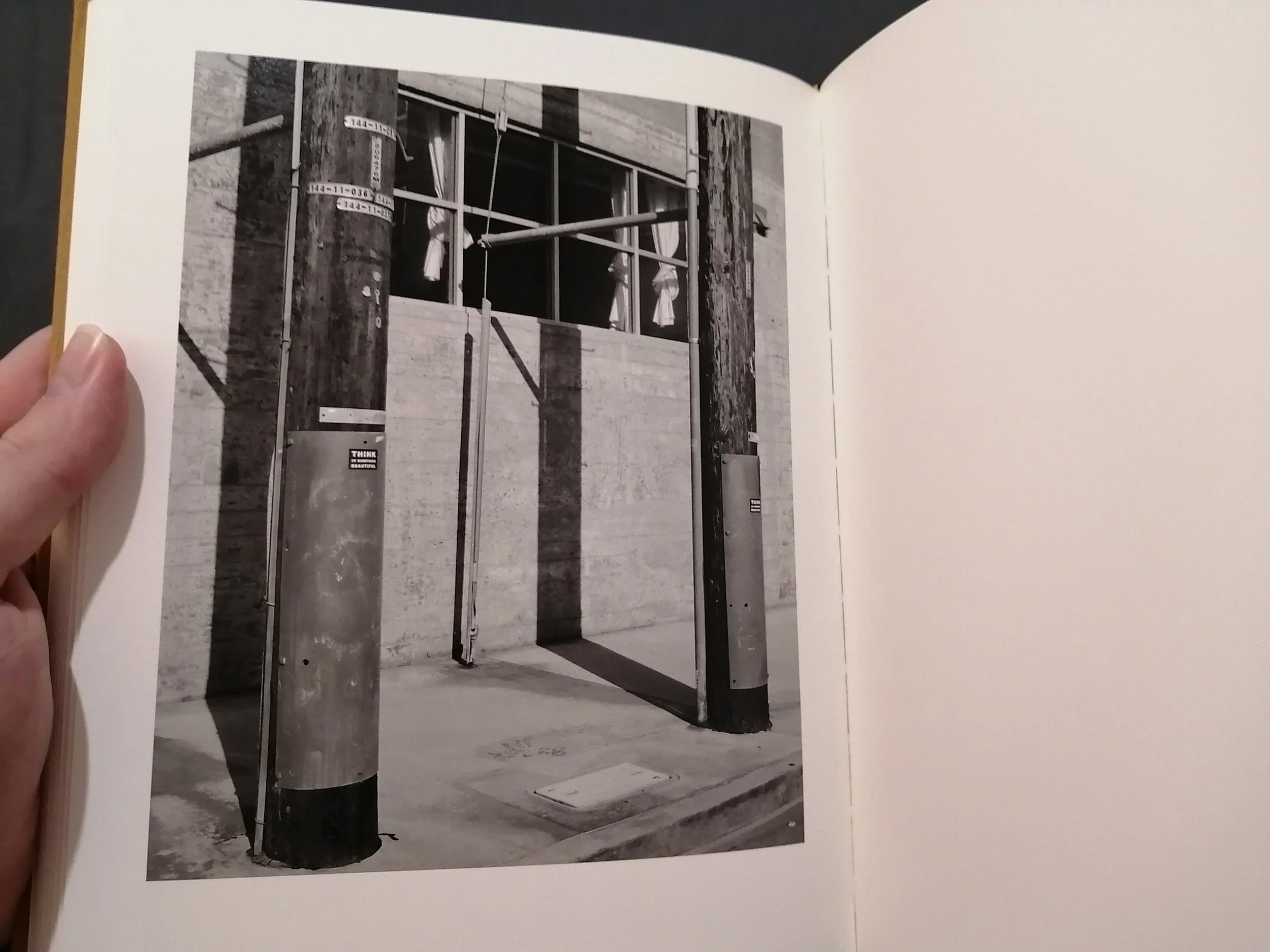
North north south by Ayda Gragossian.
Lately, I’ve begun to view photographs not so much as records, but as reflections of the photographer’s personal experiences. North North South by Ayda Gragossian is as good an example as any for exploring this idea.
If we are to read the essay at the back of the book or the publisher’s description on their website, then this is to be a book about Los Angeles. The problem with place is that it is political (and how could it not be), and anything political is a document meant to be read a certain way.
In an interview with Ayda, Yogan Muller remarks that “There is a jarring stillness in your pictures,” and that “I can hear the loud L.A. motion beating down on every subject you photographed.” To which Ayda replies, “That’s an interesting observation. I wonder if someone less familiar with Los Angeles would experience the same tension.”
To which all I have to say is yes to Ayda’s observation that the personal perception of a place is not the same as the perception of a place pictured.
The problem with place isn’t just the political; it is also about perception.
When I first looked at North North South, I saw every metropolis in North America.
If we remove the palm trees, architecture, signage, and west coast light, we are left with images that portray growing symptoms from across the Americas in our urban centers.
I am not an Angeleno; I’ve never been to Hollywood, and I never bought into this vision of a glamorous city that I needed to be shown otherwise, so Ayda’s quiet and quotidian observations versus the perceived noise and the tension are visible to me not in the way of place, but rather through the body of the photographer and her experience of it.
What I am saying is that a place prescribes a perception, and you are expected to experience it through those cultural, political, and social lenses. I want to experience photographs through the photographer’s salience of sight, and I think Ayda’s photos allow me to have that intimacy and insight.
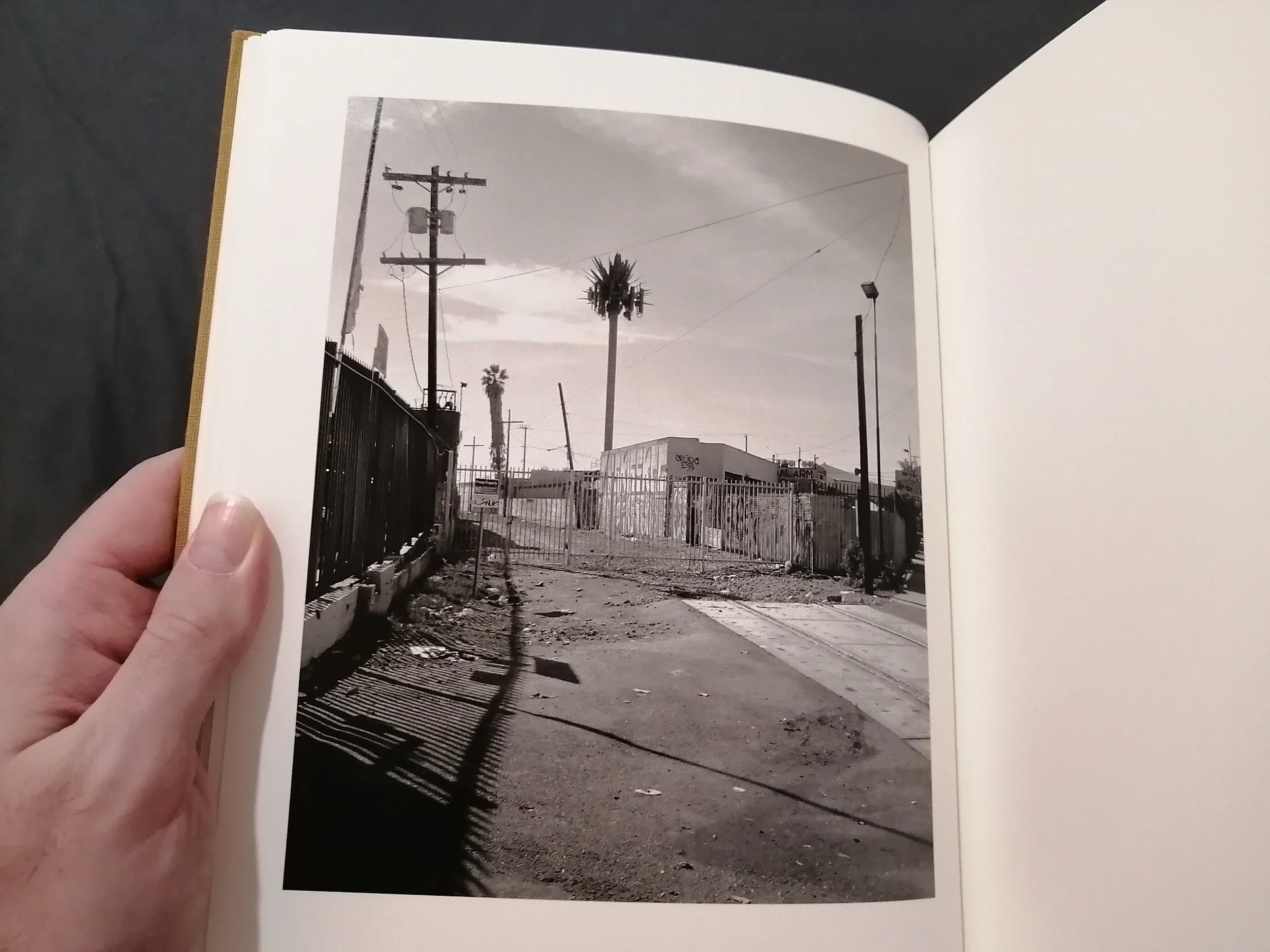
Car culture dominates life in North America, and our cities are full of manufactured horizons, dead ends, one-way streets, splintered communities, redlining, overpasses, train yards, strip malls, freeways, industrial parks, dilapidated buildings, high-rises, disparaged landscapes, and other evidentiary details of a fractured urban existence.
The act of moving one’s body through any space in constant friction with the actual has its own implications, and no doubt place can play a part in how one’s body feels when confronted with the sort of latent violence, danger, and sharp edges found interspersed throughout North North South.
We see the bullet holes, not the shooting; the burnt-out windows, not the fire; the shopping carts full of someone’s overlooked life, but not the people themselves. We are walking in the aftermath of an uncomfortable reality haunted by evidence.
For us, the sun is out, and with it, no dark shadows for someone to hide in (or so we hope). We feel safe(ish), only knowing that the city is at work and no one has time to slow down and notice us, but we know that come dusk, our bodies won’t feel safe in some of these areas, and that sunlight and empty streets won’t last all day.
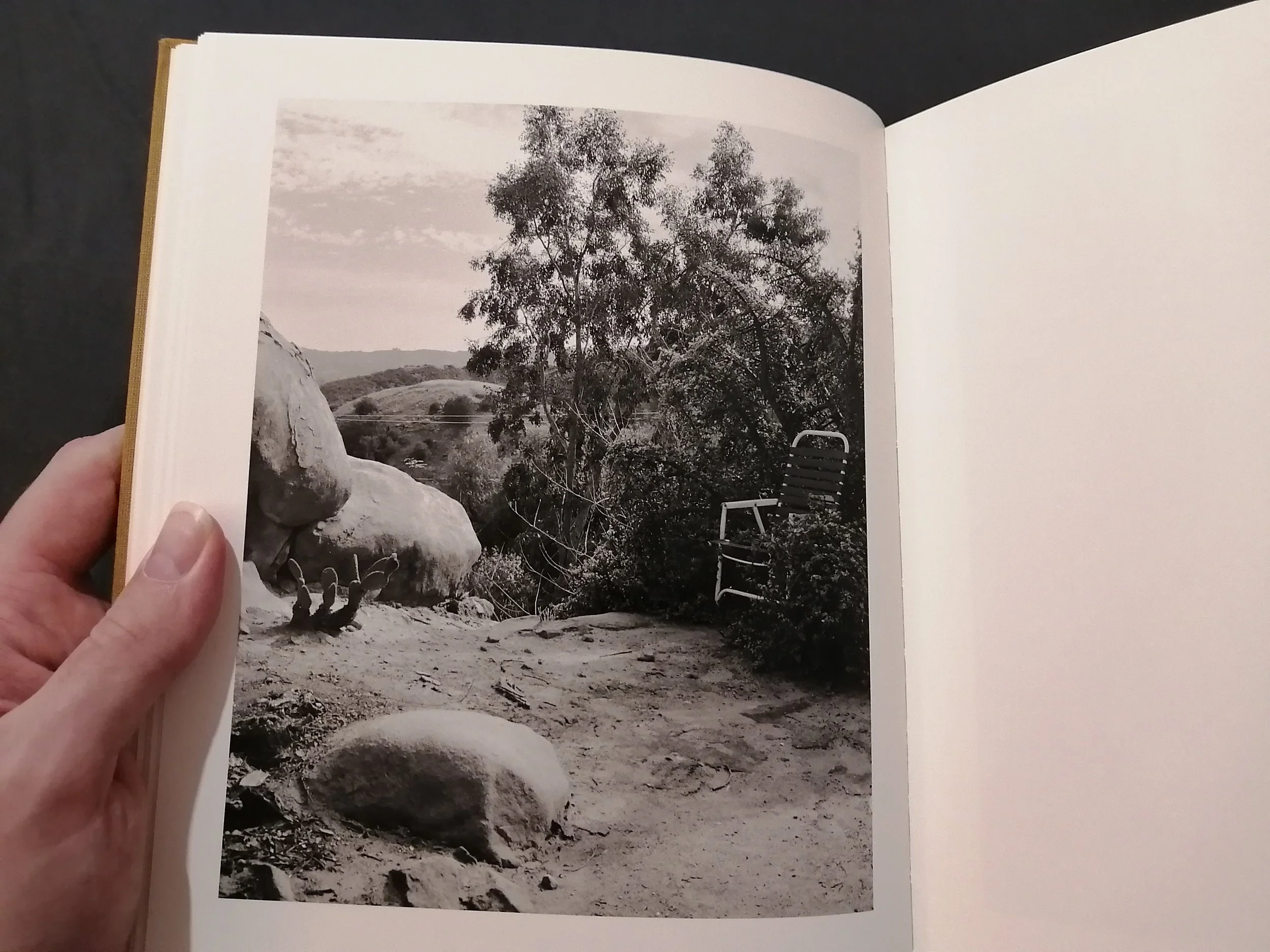
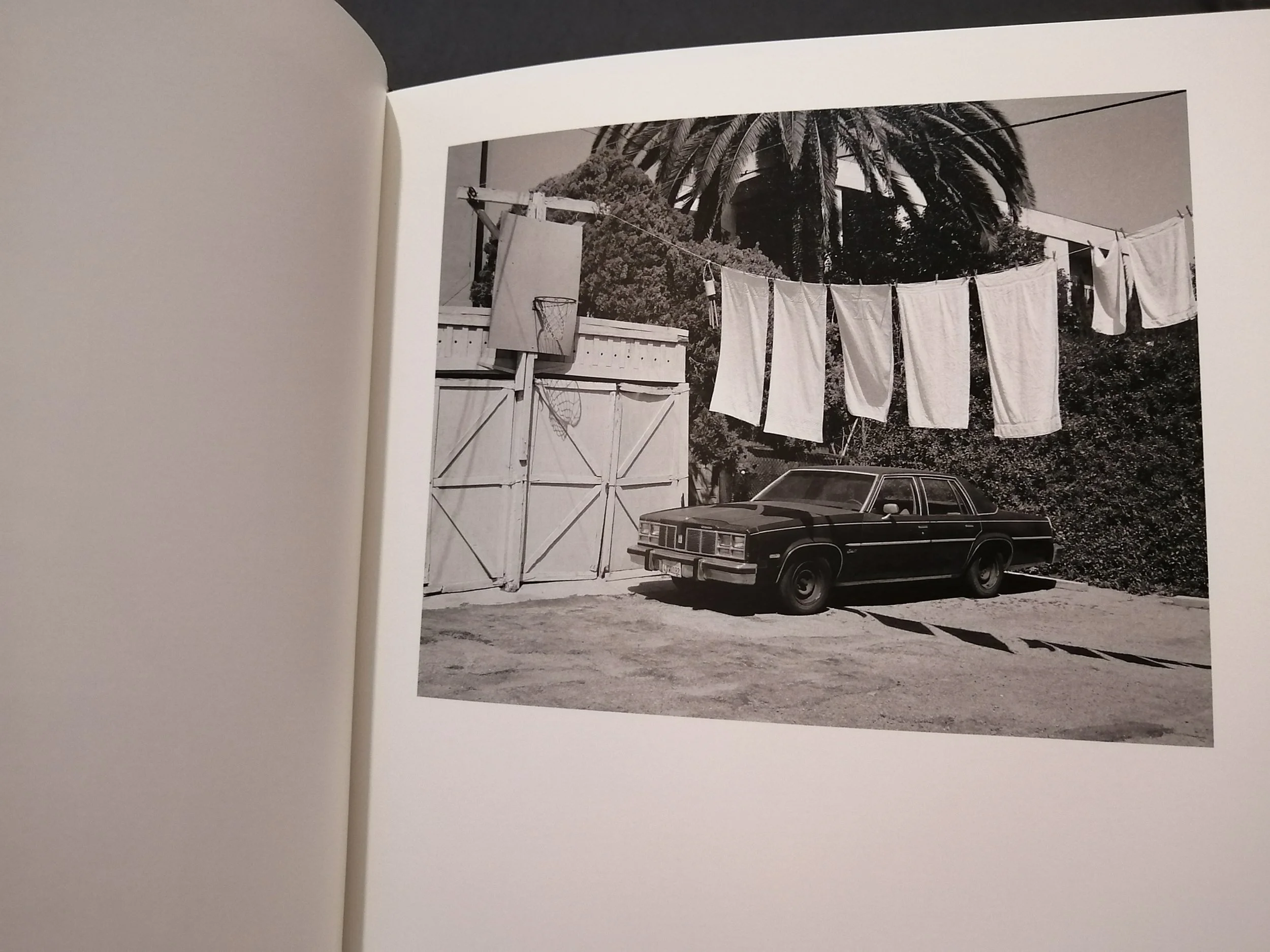
Despite this lurking danger, there is a sense of makeshift communities in the back alleys we are roaming. Hanging chairs wait for the late-day shade. White sheets dry. Balconies await the cool evening air. And there is a glimmer of possibility that these scenes could become animated with life.
There are people everywhere in Ayda’s pictures, insofar as they are evidenced by their mark on the landscape. Alleyways are empty except for everything left behind by the transient bodies that litter them. We find pallets stacked like a sculpture, mirrors reflecting the condensed space of the street, windows juxtaposing worlds, and the textures of walls, weathered posters, and telephone poles riddled with staples to be vernacular works of art.
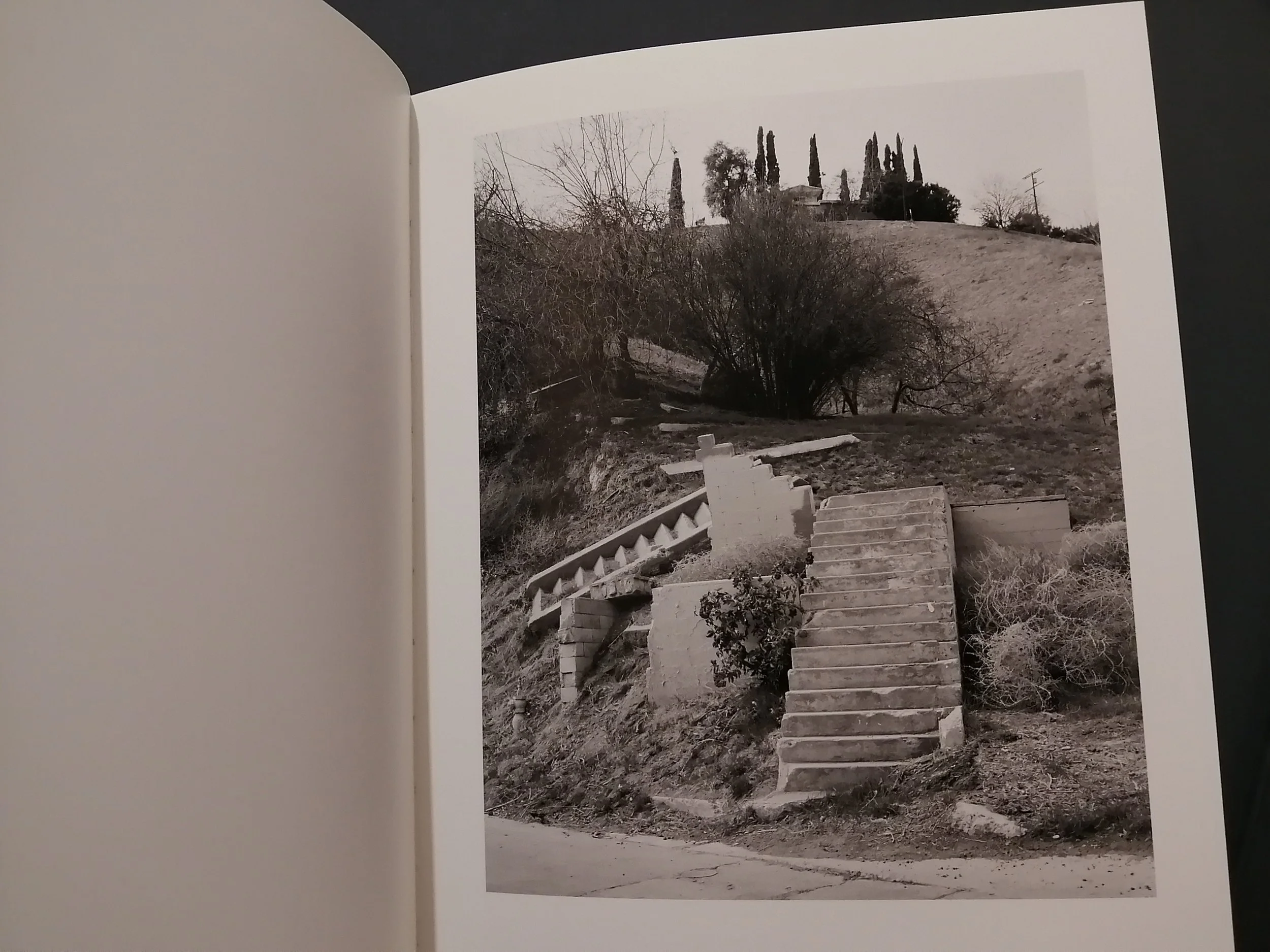
There also lingers a forgetting of purpose throughout North North South as we encounter train tracks that abruptly end at an iron gate, an overgrown staircase which climbs to nowhere, the foundations of a house that haunt a pastoral urban scene, and it seems like every door we encounter has forgotten how to open, appearing to be welded shut from the inside.
I have come to believe that certain types of photographers are drawn to haunted landscapes only to haunt them themselves by leaving a residual residue of their presence there through photographs, and North North South is no different from that description for me.
Like most cities, North North South lacks public space. One has to sympathize with the photographer as she tries to frame a scene, her feet probably slipping off the sidewalk and into the street, or her body collecting paint chips on her shirt as she pushes up against a wall in an alleyway, leaving her mark on this phantasmal landscape of forgotten names and uses as she tries to get the shot.
When we find ourselves in open spaces, they are no longer dominated by the vertical obstructions of the inner city, but rather by the horizontal concrete and steel lines that divide and blind suburban neighbours from one another. The overbearing monoliths of suburbia. Their arbitrary placement is no longer questioned as generational acceptance takes hold of the populations living on either side of the dividing lines, as indifferent motorists pass by at blurring speeds.
What we see in Ayda’s photographs is the pedestrian experience: slow-moving, stopping and seeing, bending down, standing up on our toes, twisting and bending our bodies against the manufactured landscape to allow our camera to arrive at something salient amongst the clutter.
Indeed, the best way to describe North North South may come from the publisher’s description that, “In Los Angeles, what do you see when you are not moving at 60 mph?” Though I would argue that we could say, “What do you see when you are not moving at 60 mph?” and apply that logic to any urban landscape.
Ayda’s photographs are strong, and the book’s editing and sequence are interesting, not because this is a book about Los Angeles, but rather about a body’s experience in the world through picture making.
North North South is an embodied experience, and if you use a camera to make sense of the world, then you will feel every step of the way as you navigate your way through this book.
Now, of course, I understand that place, politics, and personal experience all play a part in the making of a photograph, but as Garry Winogrand famously said, “Photography is not about the thing photographed. It is about how that thing looks photographed.”
It is my growing opinion (take it with a significant grain of salt) that photographs should live as autonomous impressions of experience. I am by no means ruling out that place does not play a vital role in experience; rather, that pictures, too, should be free from prescribed perceptions through place setting.
North North South succeeds as a book about pure photographic experience, and, through a strong essay (thankfully at the back of the book), the work allows one to discover the political landscape of Los Angeles on a second glance.
I’m certain there is much to argue against in my assertions here, and I hope Ayda will forgive me for using her book to talk about and describe some of my thoughts as of late.
So please visit the Gost website to grab a copy, and I will link a bunch of other reviews of North North South plus the interview with Ayda I quoted at the beginning of this jaunty ramble of a “review.”
This book has my highest recommendation!